John Deacon – The Quiet Linden Primary School Lad in ‘Queen’
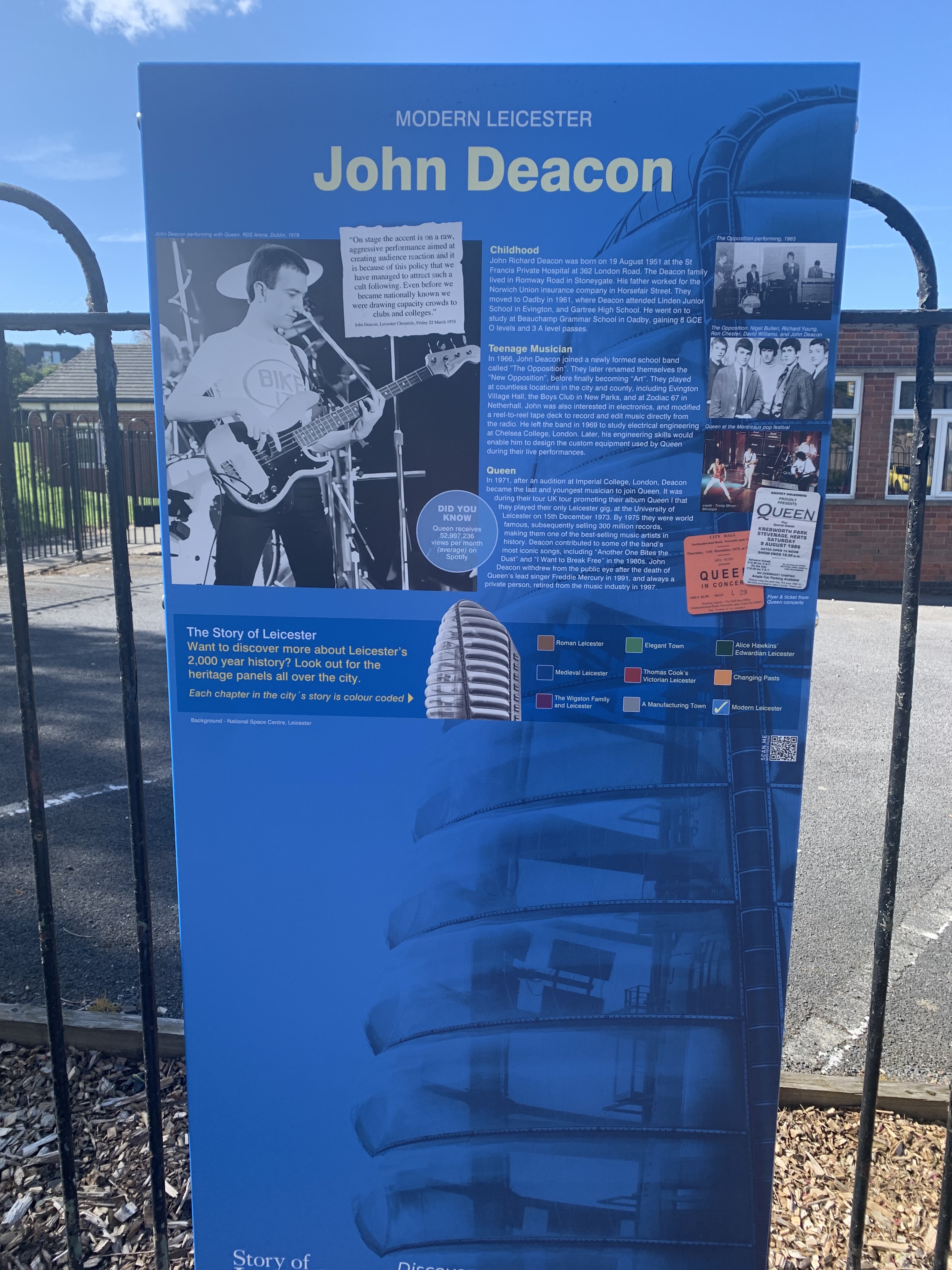
There’s something strangely moving about seeing a world-famous name placed back where it began.
If you’ve walked along Headland Road in Evington lately, you’ll have noticed the new freestanding heritage interpretation panel outside Linden Primary School. It tells passers-by that one of Queen’s four members—bassist, songwriter, and famously private figure John Deacon—was once a local child, a pupil, and a teenager playing in spaces we know, like Evington Village Hall, before the world knew his name.
For many Evington readers, that lands differently than a documentary ever could. It’s not “music history” at arm’s length. It’s the reminder that the person behind some of the best-known songs on the planet once did the same small things our own children do: walked to school, got on with lessons, made friends, joined a band, and followed an interest that quietly became a life.
A Leicester childhood—and a mind that liked to understand how things worked
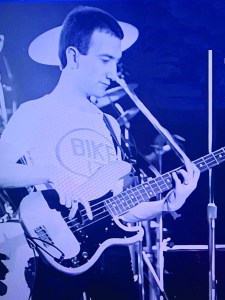
The panel notes that John Richard Deacon was born in Leicester on 19 August 1951, with the family living first in Stoneygate before later moving to Oadby. It’s the sort of detail that anchors him in a recognisable Leicester story—parents working, schools and exams, a childhood measured not by fame but by routines.
What stands out even in the panel’s brief summary is not loud ‘born to perform’ drama, but something more down-to-earth: John Deacon’s early mix of music and electronics. That combination—art and engineering—turns out to be a perfect description of what Queen became: a band with showmanship on the surface and serious technical precision underneath.
Teenage bands and local venues: learning the craft
Before stadiums and global tours, Deacon played in a school band that changed names as teenage bands do: The Opposition, then The New Opposition, then Art. The panel lists venues that will spark memories for plenty of Leicester readers—places like Evington Village Hall, youth clubs and city venues where bands learned how to set up, plug in, play through mistakes, and keep going when the room was half-full.
This part of Deacon’s story is especially easy for local families to picture. It’s the “before” that so many success stories skip: the hours rehearsing, the practical problem-solving, the shared jokes, the carrying of equipment, the thrill of a good night and the stubbornness required after a bad one.
And then there’s one detail on the panel that reveals the kind of teenager he was: Deacon modified a reel-to-reel tape deck so he could record and edit music from the radio. That’s not casual tinkering. That’s a mind drawn to systems—someone who wanted to shape sound, not just listen to it.
From engineering student to Queen’s missing piece
In 1969 Deacon left the band scene to study electrical engineering in London. Two years later, after an audition at Imperial College, he became the last—and youngest—member of Queen, joining Freddie Mercury, Brian May and Roger Taylor.
It’s worth pausing on that: he didn’t join as a ‘character,’ but as a musician who could deliver what the band needed. Queen’s music demanded tightness, timing and taste. Deacon’s bass didn’t fight for attention; it made everything else possible.
His engineering instincts mattered too. One of the best examples is the legendary “Deacy Amp”—a small homemade amplifier built by Deacon in Queen’s early years that Brian May used to help create some of his distinctive layered guitar sounds. (If you’ve ever wondered how Queen could sound so huge, so orchestral, so impossibly full, part of the answer is: the quiet bassist-built tools that made new sounds possible.)

Freddie Mercury and John Deacon: not flashy, but essential
People often ask what Deacon’s relationship with Freddie Mercury was like. The truth is: it wasn’t performed for cameras. Deacon was known for being private, and Queen’s magic came from contrasts—Freddie’s theatrical brilliance out front balanced by a band behind him that was disciplined, inventive and rock-solid.
In a sense, Deacon’s role was to be the foundation that let Freddie fly. It’s hard to overstate what that means in a band like Queen: huge risks only work when the structure underneath is unshakeable.
The day Queen played Leicester
The panel highlights a local milestone many people don’t know: during the UK tour promoting their first album, Queen played their only Leicester gig at the University of Leicester on 15 December 1973. That date places the global story back into local time and space: for one night, the band that would soon fill arenas played here—close to where John Deacon’s story had started.
The songs everyone knows (often without knowing Deacon wrote them)
Deacon contributed far more than basslines. The panel rightly notes two standout examples: “Another One Bites the Dust” and “I Want to Break Free.” These aren’t just Queen songs; they’re songs that have outlived their era—played at weddings, parties, football grounds, in films, on radios, in shops. They’re part of the background music of modern life.
And it’s striking that the man behind them chose not to chase the spotlight.
Why the Headland Road panel matters
After Freddie Mercury’s death in 1991, Deacon withdrew from public view and later retired from the music industry—consistent with the way he always seemed: serious about the work, uninterested in celebrity for its own sake.
That’s why this new panel outside Linden Primary feels so fitting. It doesn’t try to turn Deacon into something he wasn’t. It simply places his story back into the neighbourhood—so local people can stand there, read it, and think: someone from here did that.
Next time you’re passing the school gates on Headland Road, take a moment to stop. Read the panel. And remember that greatness isn’t always the loudest person in the room. Sometimes it’s the quiet, focused one—the Linden lad who helped build the sound of Queen.
“Did you know?”
- A Linden connection you can still visit today: John Deacon now has a freestanding heritage interpretation panel on Headland Road outside Linden Primary School, installed as part of a wider Leicester heritage-panel programme.
- Queen played Leicester just once: During the tour for their first album, Queen’s only Leicester gig was at the University of Leicester on 15 December 1973.
- He wasn’t only “the bassist”: Deacon wrote major Queen hits including “I Want to Break Free” and “Another One Bites the Dust.”
- The engineer in the band: Deacon’s electronics know-how fed directly into Queen’s sound. One famous example is the “Deacy Amp”—a small homemade amplifier he built that helped Brian May create some of Queen’s distinctive layered guitar tones.
- The quiet one stayed quiet: After Freddie Mercury’s death in 1991, Deacon withdrew from public life and later retired from the music industry—remaining as private as he’d always seemed, even at the height of Queen’s fame.



So good to read about this as I knew Kasabian had a Leicester connection but not Queen!