Is the NHS in Bed with the Private Sector?
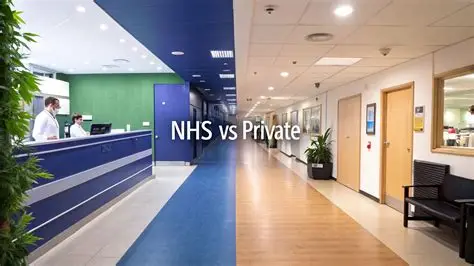
The Private sector has made £1.6 billion profit from our NHS in the last two years. The NHS spent roughly £18-20 billion on private healthcare from 2023-2025. Politicians and NHS bosses have made no secret of the fact that they work with the private sector in providing healthcare to the population.
Private provision is nothing new, when the National Health Service was created in 1948 under Aneurin Bevan, it was never purely state-run in the way people sometimes assume.
To get doctors, especially General Practitioners (GPs) and consultants, on board, Bevan made a key compromises. GPs could remain independent and hospital consultants could work for the NHS and continue private practice and private “pay beds” were allowed within NHS hospitals. Bevan famously described this as “stuffing their mouths with gold” to secure cooperation.
From the 50s to the 70s many NHS hospitals had private patient units and consultants treated NHS patients (free at point of use) and Private patients (fee-paying), often in the same buildings. This blurred boundaries and created tensions, concerns about queue-jumping and questions over fairness and resource use were expressed.
From the 70s–80s there was political conflict over private care and private involvement became a major political issue. Under Barbara Castle as Minister of State for Health, Labour attempted to phase out pay beds in NHS hospitals. However private medicine did not disappear, it shifted more into independent private hospitals.
During the1990s the “internal market” was introduced under Margaret Thatcher and later governments, with the NHS split into Purchasers (health authorities, later commissioners) and Providers (hospitals, trusts). NHS bodies could buy services from private providers, which marked the beginning of systematic outsourcing.
During the 2000s expansion under Tony Blair’s New Labour, the private sector was used to reduce waiting times. With the creation of Independent Sector Treatment Centres (ISTCs) NHS patients could be treated in private hospitals paid for by the NHS. In addition, the Private Finance Initiative (PFI) was introduced and used to build hospitals through private financing of NHS infrastructure. This then tied the NHS into long term contracts as the companies concerned had to be paid back handsomely. Thus, private providers became embedded in NHS delivery, not just optional extras.
The 2012 reforms opened the NHS up to competition with The Health and Social Care Act 2012 introduced under David Cameron. This expanded the role of competition and contracting and allowed any qualified provider (including private companies) to deliver NHS services as well as strengthening commissioning bodies (e.g., Clinical Commissioning Groups, now ICBs). Thereby, private companies could more easily win NHS contracts.
Today, the overlap between private and NHS healthcare shows up in several ways, the NHS pays a private provider with the patient paying nothing. This is common in elective surgery such as hip replacement or cataract removal. There is also private practice within NHS settings as consultants may work NHS hours but also see private patients, sometimes in NHS facilities or nearby private units.
Fully private care also exists, paid by insurance (e.g. Bupa) and self-paying patients.
Most GP practices are privately run partnerships contracted to the NHS. It surprises many people that GPs are not state employees.
Recent trends (2010s–2020s) have seen increasing NHS use of private providers due to backlogs (especially after COVID-19), capacity shortages, growth of companies delivering diagnostics, community services and digital health. However, the NHS still overwhelmingly provides the majority of care directly.
In 2025 a total of 6.15 million appointments, tests and operations were delivered by independent providers for NHS patients.
The almost 500,000 increase on 2024 the government says is helping to cut waiting times, free up NHS capacity and deliver national renewal through the government’s Plan for Change
Patients able to cut waiting times by up to 5 months by switching to a nearby hospital with shorter queues.
Increasing numbers of people are paying privately due to delays in receiving NHS care with some paying for private operations ending up out-of-pocket annually. One strong area in the of growth of private care is in private diagnostics and consultations.
In dentistry, about one-third of people now use private services due to NHS access problems.
This increases key tension, principle versus practicality. The NHS is based on free care at the point of use and universal access, and private involvement raises ongoing debates about equity (queue jumping, two-tier care), efficiency (does outsourcing help or cost more?) and accountability (private vs public oversight)
Thus, is can be said that despite the dilemmas presented, private provision of healthcare has infiltrated the NHS by an ongoing osmatic process that sees non fee paying or insurance covered people leaking out of the care of the NHS into the private sector. Many people are thankful for this, despite the fact that it means it costs the NHS more and there are opportunity costs to the NHS.
The British Medical Association (BMA) has raised concerns about the expansion of private provision, arguing it may risk a credible longer-term plan to increase NHS capacity.
Sources
- https://act.38degrees.org.uk/act/Stop-Private-Profits-eoi
- https://www.standard.co.uk/news/health/nhs-david-hare-england-government-b1235920.html
- https://www.gov.uk/government/news/faster-care-for-thousands-thanks-to-nhs-use-of-independent-sector
- https://www.theguardian.com/society/2023/may/24/record-rise-in-people-using-private-healthcare-amid-nhs-frustration
- https://www.the-independent.com/news/health/nhs-operation-waiting-list-private-hospital-b2780578.html
- https://www.nuffieldtrust.org.uk/news-item/patients-drift-towards-paying-for-hospital-care-out-of-their-own-pocket-across-all-four-uk-countries
- https://www.bma.org.uk/media/fy3czsaf/bma-nhs-outsourcing-report-september- 2024.pdf