Cynthia Brown and her contributions to Leicester
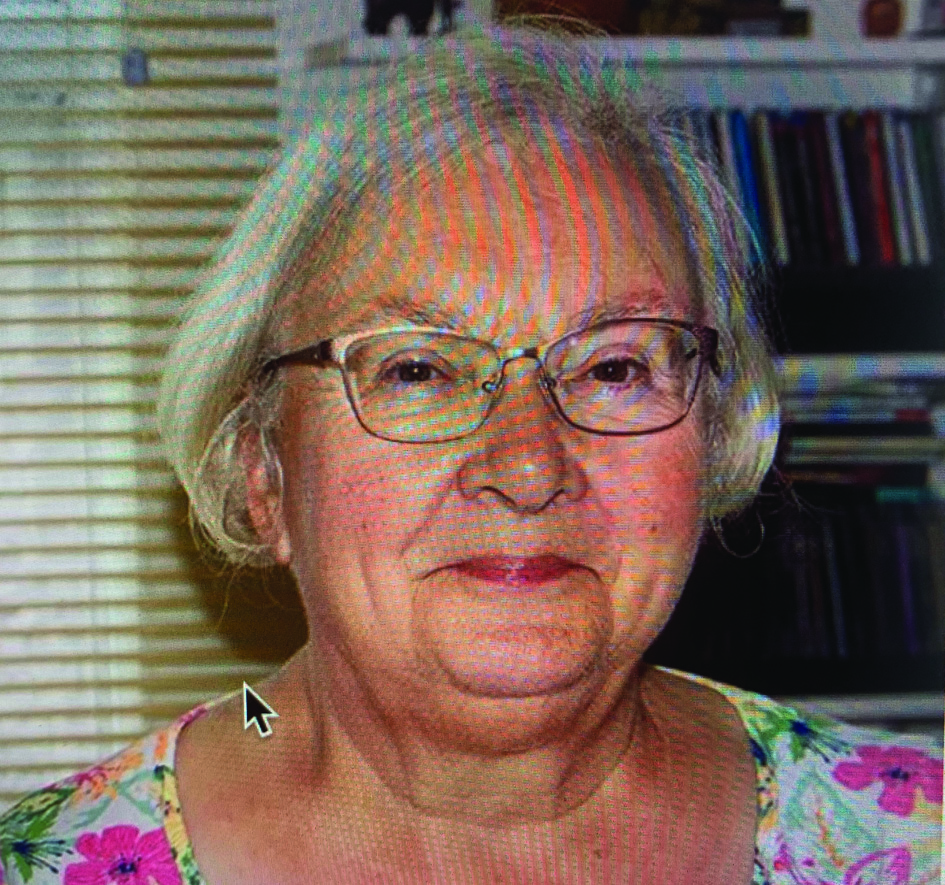
In 2014, when we, at the Evington Echo, were marking the centenary of 1914 and the start of the First World War, we were fortunate to work with local historian Cynthia Brown. Her contribution was typical of what so many groups across Leicester have come to value: careful research, clarity of explanation, and a real commitment to making history accessible—without ever sacrificing accuracy.
Cynthia is widely respected as a Leicester-based local historian, author and educator, with particular strengths in social history and oral history. Again and again, her work demonstrates how the “big” themes of the past—migration, work, family life, childhood, celebration, hardship—are best understood through local evidence and lived experience. Whether she is interpreting archives, photographs, or recorded memories, her approach is consistently thorough and humane.
A major strand of Cynthia’s work has been adult education. Over more than twenty years teaching for the Workers’ Educational Association (WEA), she helped learners engage with history not as distant facts, but as something rooted in place, community and family memory.
Alongside teaching, Cynthia has played a significant role in local historical publishing. She has been reviews editor for the Leicestershire Archaeological and Historical Society publication Leicestershire Historian, and her work reflects a strong belief that local history should be both well-researched and widely shared. Readers will also know her as a writer and editor of local-history publications, including Leicester Voices (2002)—a work bringing together oral testimony, photographs and archival material to capture Leicester lives and neighbourhoods—and as editor of The Story of the Saff.
Cynthia’s research interests are broad, but a consistent thread is everyday experience: she has explored topics such as 20th-century childhood, Victorian and Edwardian traditions (including seasonal customs), and the ways communities remember and interpret their own histories. She is also an engaging public speaker. Many will have heard her at Leicester’s History and Heritage group, She is also an engaging public speaker. Many will have heard her at Evington’s History and Heritage group, where she has delivered illustrated talks—most recently, for a February meeting, on Edwardian Leicester. She also contributes talks for groups such as the Leicester Victorian Society, where themes like what Christmas was like in Edwardian Leicester bring the period vividly to life, and she has delivered events in partnership with Leicester Museums.
One example of Cynthia’s ability to connect local incident with larger themes is her work on the Thurnby bell-ringing dispute of 1862–63, described memorably as “a small civil war”: a story that illuminates what can happen when poverty, penalties, and authority collide, and how public opinion can shape outcomes in ways still recognisable today. The article is available at LH59-2023-51-55-Brown.pdf.
Cynthia’s impact extends beyond Leicester through her leadership in oral history. She is a Trustee of the Oral History Society, is one of its Accredited Trainers, and acts as a Regional Adviser (covering Leicestershire and Rutland / East Midlands. She began her oral history career in the 1990s within a community history unit at Leicester City Council, and in 2001 helped establish the HLF-funded East Midlands Oral History Archive (EMOHA) at the University of Leicester, serving as Project Manager for three years. Her publications in the field include work on using oral history for family history research (with Mary Stewart, published in Archives and Records, April 2017) and reflections on oral history and migrant communities in Britain (published in Oral History, Volume 34, No. 1).
Now semi-retired, Cynthia continues to research and write, and remains deeply involved in supporting oral history practice and local historical understanding. For those of us who have worked with her, her legacy is not only in what she has written and edited, but in the standard she sets: that local history deserves the same seriousness as any other history—and that community stories are worth preserving with care.
With thanks to Cynthia for checking the details and suggesting any corrections before publication.