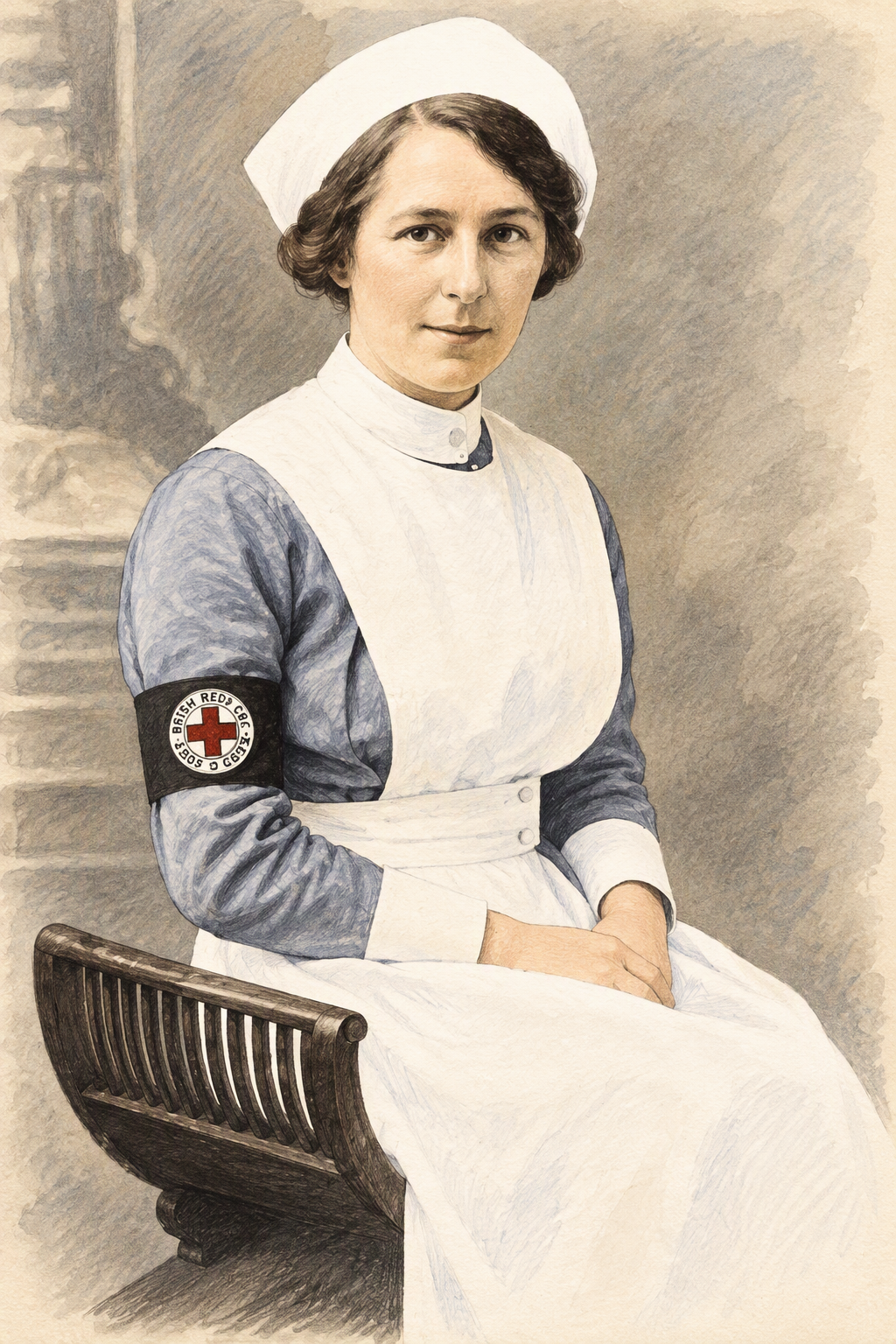
Evington’s VAD Hospital (Voluntary Aid Detachment)
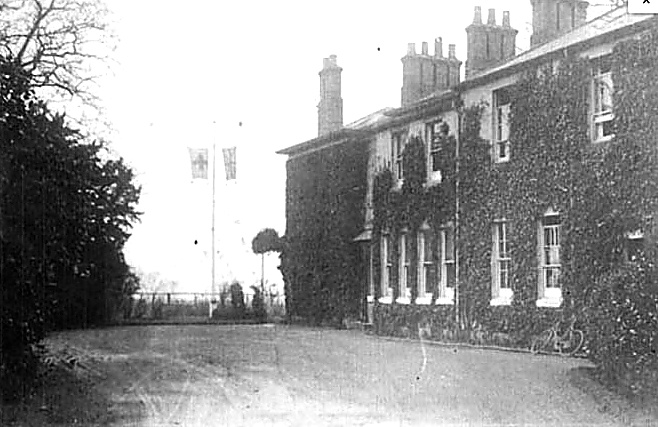
The building now known as Evington Park House served as a First World War auxiliary hospital known as Knighton VAD Hospital, or VAD Leicester 4.
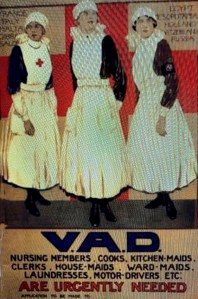
VAD (Voluntary Aid Detachment) hospitals were established by the Joint War Committee, which brought together the British Red Cross Society and the Order of St John of Jerusalem under the Red Cross emblem. Suitable buildings throughout Britain were converted into auxiliary hospitals to care for wounded servicemen. By the summer of 1914 there were around 2,500 VAD hospitals across the country. Of the 74,000 VAD members serving in 1914, approximately two-thirds were women and girls.
Knighton Hospital was attached to the Leicester Base Hospital, now the Fielding Johnson Building at the University of Leicester. During the autumn of 1914, preparations were made in anticipation of receiving casualties. Lists were compiled of beds, tables, cooking equipment and other essential supplies. The call finally came in December, and the house was generously lent for use as a hospital and quickly fitted out. The first nineteen patients arrived from Leicester Base Hospital on 28 December 1914.
The hospital’s Commandant was Miss Alice Henderson, who in 1919 wrote an article for the Wyggeston Girls’ Gazette describing life at the hospital. Her account reveals a place that, despite the hardship of war, was remembered for its spirit of service, companionship and care.
“The day in the kitchen begins at 7 a.m. (approximately), when three somewhat sleepy individuals arrive to prepare breakfast of porridge, tea and cocoa, bread and butter, treacle and, on the welcome occasions when gifts have been sent, eggs, ham or tongue.
Breakfast is ready in the dining room at eight o’clock, usually for more than half the men who are in hospital, while at the same time the night nurses and some of the ward nurses take breakfast to those who cannot come down for it.
From breakfast throughout the morning the kitchen is a very busy place. Soup has to be prepared as an alternative to milk at 10.30, huge joints of meat have to be put into the oven in good time for the 12.30 dinner, puddings made, potatoes and vegetables cooked and, of course, gravy, sauces and special diets prepared.
In addition, the dining room must be swept and dusted several times daily, while the pantry and kitchen are kept clean. Last, but by no means least, there is the inevitable washing-up after every meal.
Tea is served at four o’clock, followed by preparations for supper at 7.30 p.m. Vegetables, puddings and anything else that can be prepared in advance for the following day occupy the kitchen workers until around eight o’clock in the evening.
It will have been noticed that early to bed is the order at Knighton House. Last week, however, we celebrated the winning of a Distinguished Conduct Medal by one of the soldiers, with a special entertainment followed by supper in the dining room, and the men were allowed to stay up until nearly nine o’clock!
Most of the men who have been in the hospital have come from the Front. They include Regular soldiers, some of whom had previously served in India or Africa, Reservists who rejoined in August, and Territorials.
Among the latter was one Scottish lad of seventeen who had never travelled further than Bedford. Recovering from rheumatism, he became a great source of amusement. The other men in his ward tied him in his sheets at night, played practical jokes on him during the day, and finally presented him with a cigar on his last evening. He bravely smoked it, although the consequences were unfortunate.
Another memorable character was a travelling showman who listed in an autograph book a long series of supposed engagements, including Ypres, Armentières and La Bassée. In reality, he had spent the war driving a traction engine between the coast and headquarters, or along some other comparatively safe route.
Readers of the Gazette will be pleased to hear that there are at least twelve Old Wyggestonians working at the hospital, some regularly and others when their duties permit. Several work on the wards, two bring their professional expertise to the kitchen, one acts as chief stoker of the kitchen fire and another as principal soup maker, while many have become remarkably skilled potato peelers.
Thanks are also due to those Wyggestonians, including staff, former pupils and current pupils, who have contributed to the evening entertainments enjoyed by the soldiers.”
Alice C. Henderson
Commandant, VAD Leicester/4
VAD Leicester/4
Registered: 18 March 1914
Commandant: Miss Alice Henderson MBE (resigned April 1919)
Quartermaster: Miss Gwendolen Whittingham (resigned September 1919), succeeded by Miss E. M. Arculus
Medical Officer: Dr G. H. Crofts
The detachment included a large number of local volunteers who gave their time and energy to the care of wounded servicemen both at Knighton and later at Evington.
Several members of the detachment went on to serve overseas or in military hospitals at home. Their service took them to France, Egypt and Salonika, while others continued their valuable work in hospitals throughout Britain.
The detachment was also initially responsible for providing refreshments to wounded soldiers arriving in Leicester on ambulance trains. When Knighton VAD Hospital opened, members volunteered to undertake all kitchen and pantry duties, responsibilities they carried out with great success.
When the hospital later moved to Evington Village, Miss Alice Henderson continued to serve as Commandant until its closure. Alongside her was Miss Gwendolen Whittingham, who served as Quartermaster and became one of the key figures in the hospital’s day-to-day operation. Her responsibilities included securing food, fuel, bedding, clothing and medical supplies, ensuring that the hospital could continue to care for wounded servicemen throughout the war.
Service records show that Miss Whittingham devoted more than 3,000 hours of voluntary service between 1914 and 1919. In recognition of her contribution she received formal commendations and was awarded the British Red Cross Society War Service Medal.
Miss Alice Henderson was later appointed an MBE for her wartime work, while Miss Gwendolen Whittingham was mentioned in despatches in recognition of her service to the hospital.
Legacy
The story of Evington’s VAD Hospital demonstrates how ordinary local people made an extraordinary contribution during the First World War. While soldiers fought overseas, volunteers at hospitals such as VAD Leicester/4 cared for the wounded, provided comfort during recovery and helped sustain the war effort at home. Their dedication forms an important part of Evington’s wartime history and remains a lasting example of community service in a time of national crisis.